Sunday, 23 October 2016

My Weekly Report and Reflection #6:

     After looking back on this math course, I have learned a lot of from all of the instructional forums, and blogs. Unfortunately I learned more from these online-based assignments, than the traditional lecture-based format of learning. This truly shows that there is now a "21st Century" based learning process that is being instilled within not only today's youth, but also my generation as well. The picture below relates to the 21st century based learning in today's society. 
Image retrieved from: http://21stfair2010.wikispaces.com/file/view/whiteboards.jpg/163632339/396x258/whiteboards.jpg

     In the last class, my partner and I had the opportunity to deliver a 30 minute presentation, with regards to "financial literacy". The purpose of this lesson was to facilitate a beneficial lesson to my peers to explore a topic that was not "traditionally" taught within  the Math curriculum. What my partner and I decided to deliver was a "real-life" application of financial literacy. This lesson was based around real-life financial literacy such as "money management, life planning, and setting life goals". Reflecting back on this lesson, I should have delivered a more interactive lesson, relying more on the interactive sections within the lesson. 

     Three important things that I have learned from these Online Modules include:
  1. Math is a universal language
  2. There is no such thing as a "Math Person"
  3. A growth mindset is the best mind set to have (making mistakes, makes the brain grow) 
     Math overall is something that you practice throughout your life, and people should not be discouraged from continuing to learn math. Everything we do in life, somehow involves math and we should always be looking to expand our math understandings. One idea that stuck with me throughout this course was, "there is no such thing as a math person". Anyone can learn math, they just need to be willing enough to put in the time to properly understand the big ideas when it comes to Math. Last but not least, a growth mindset is essential for understanding Math. The interesting fact with this statement is that making mistakes actually helps our brains grow, and makes us become a more reflective math practitioner. The video below just consolidates the idea that Math is a "Universal Language". 


     Throughout the lesson, we participated in different lessons that go over the different instructional applications of the math strands:
  • Number Sense and Numeration
  • Measurement
  • Geometry and Spatial Sense
  • Patterning and Algebra
  • Data Management and Probability 
All of these strands can include a 21st century approach to learning, integrating technology within the classroom. One of the effective ways I saw this done was integrating the use of an iPad within the classroom as an instructional tool. The students can go on an app on the iPad and answer questions with regards to different Math problems. Math is an ongoing skill that needs to be constantly reflected on and improved upon in order to ensure life-long learning of math

Thanks for reading my blogs:


Image result for smiley face clipart


Wednesday, 12 October 2016

My Weekly Report and Reflection #5

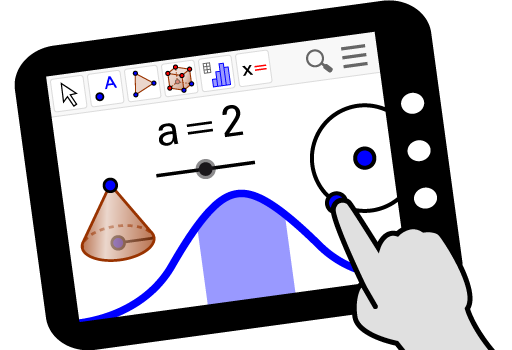
    This week, there was a clear connection to the online resources (visual aids) and manipulations while answering mathematical problems. During class time, we went through a lot of online mathematical resources such as GeoGebra, that could be used within the classroom setting, giving students a visual, and a manipulation for algebraic problems. These students were able to manipulate the shape that they made with respect to the co-ordinate graph. If the students had to do this by hand, there would be no way for them to figure out the interior angles as quickly as this app does. The picture below represents the segments and shapes that you can manipulate using this resource.
Retieved from: https://www.geogebra.org/images/landingpage/landingpage-icons-tryout.png, on October 12, 2016


     During this class, we discussed a lot of different topics with regards to differentiation within the classroom, and methods to help students with memorization and mathematical equations. This lesson was extremely difficult for me to understand, because I understand mathematical problems with writing them out on paper, in order to make sense of them. With this UDL (universal design for learning), it often comes with a couple of road bumps. Some of these road bumps include, not taking into account all of the"outdated" ways of learning such as the old fashioned "pen-and-paper" method. Students who are used to having  a visual representation in front of them are now forced to make sense out of a diagram displayed on the overhead projector. Another possible road bump is not having access to technology within the classroom, and not singling any student out for not having a technological device.  
Retrieved from: https://z4zao2x5yv31zz19n46kfiid-wpengine.netdna-ssl.com/wp-content/uploads/2016/04/17125152.jpg, on October 12, 2016
      Overall, the main message behind this lesson, is that there are useful applications of using technology within the classroom to supplement your lesson. There are many other ways to answering math questions than the traditional "pen-and-paper method" and memorizing formulas. There is a huge variety of online resources that teachers can use in order to supplement their lessons. In no way should the lesson solely consist of JUST technology, but there should be a technological aspect included within the lesson to "spice" up the lesson so to speak. It will be interesting to figure out which resources work best within my teaching practice, allowing different students to gain a whole new perspective on answering math questions. 

Wednesday, 5 October 2016

My Weekly Report and Reflection #4

     This week's Math class had a lot of useful activities, understanding what interleaving was and how  it related to a rich performance task. All of the tasks we did within class required a "higher-level of learning" and reasoning, requiring the students to have a "growth mindset". Every task we did within class, was extremely rich and needed to be executed with a partner, which allowed every student to "talk" about the strategies that they used in order to answer the questions. In the previous forums, "talking about the strategies" is one of the most effective ways for students to not only learn themselves, but to learn from others as well. This strategy was very effective when introducing the concept of "Interleaving practice" into the curriculum. Interleaving practice means that students do not answer questions in a blocked format, but in a randomized format. Our instructor achieved this by having us go around the room, completing various "stations" that required us to think of different strategies in order to answer the questions. The Problem below goes over a mathematical solution to explain the concept of "growth" utilizing multiplication, addition, and problem solving skills.
Heartwell, 2016
     Another station that we were asked go go to was the "spiral" station, drawing flower like objects from using the tool below. An extension of this could be (Where could this technique be used in the real-world, or how many times does it take the pencil to go around a whole 360 degree rotation). This tool was extremely interesting to use and visualize the different colours that could be incorporated into this. This was an extremely rich performance task for the class to complete.
Heartwell, 2016 
     Rich Performance Tasks (RPT) require "open-ended and higher-order thinking" questions that need a thoughtful application of knowledge and skills in context. They establish authentic contexts that reflect the genuine application of knowledge, and students are motivated by "real-world" applications. RPT's when used in assessment enable teachers to gauge student understanding and proficiency with complex processes, not just measuring discrete knowledge. They are suited for the 21st century learner, weighing heavily on the 21st century skills such as, critical thinking, problem solving, collaboration, communication, and technology use. I experienced this when our teacher asked us to expand mixed fractions such as 3 1/4 and 2 5/6 and find the range between the two numbers. The teacher approached this question with decimals in mind, where I took a different approach and expanded these numbers. I found a common denominator and expanded, 68/24 to 78/24, any number between these numbers would fit. the teacher noticed this technique, and I had to explain to the class on the board. These problems intrigued me because I have a strong previous understanding of improper fractions. A real world application of this could be with lumber with buy a certain amount of lumber to cover the perimeter of a fence. These problems were a good way to address the 21st century learner skills, and should be incorporated within the classroom as readily as possible.

Wednesday, 28 September 2016

My Weekly Report and Reflection #3:

      This week, within the modules I found myself answering questions regarding the speed of students answering questions, and if that is related to their performance. We also reviewed videos on mistakes, and how that making mistakes actually expands students brain capacity. This concept had to be refined because just making mistakes on your own is not going to expand any students brain capacity. The student needs to struggle with the problem in order for any growth to occur, firing off synapses expanding their brain capacity.
Retrieved from: https://bhi61nm2cr3mkdgk1dtaov18-wpengine.netdna-ssl.com/wp-content/uploads/2015/09/synapse.jpg , on September 27, 2016

     Some things that I learned this week were how to effectively use mental math in order to answer quick questions. This skill really reinforced my previous knowledge and made me struggle with certain problems. I was reminded of the previous modules about how the process of struggling with math problems actually helps your brain make connections. During this exercise, I often found myself struggling and frustrated with the problem however, I stuck with the problems and I eventually figured them out after a lot of struggling  
Heartwell, 2016
       As a future educator, I found the booklets given below, were very effective at consolidating the previous questions. This booklet below (done in pairs) is an extremely effective way  at getting students to explore patterns within a fun multiplication way. This booklet also would be a great way to pair up students that were struggling with the concepts with students who were efficient at answering these problems.  
Heartwell, 2016
     Overall, I enjoyed the different task that Dr. Khan assigned us within class, because it got our minds thinking, and encouraged group work. Within a math class, one of the most difficult tasks to do is engage the whole class with a task that intrigues the students, making math meaningful. This task can be augmented in order for groups of students to work on these problems as a race to finish all of the tasks within the booklet. These students can learn the same information, however with peer help and from a different view point, the teacher can differentiate this task very easily for different types of learners. This can be done by having stations, based off of the difficulty of the booklets, and the level of the students learning. Summing up this week, I had a lot of Ah-ha moments, and a lot of challenging moments as well, being tested intellectually. I will have to take some of these exercises and use them within my upcoming teaching placements. 

Resources:

Mathematics: The Ontario Curriculum, Grades 1-8. Toronto, ON: Ministry of Education and Training,        
       1997. Print. 

Tuesday, 20 September 2016

My Weekly Report and Reflection #2:


     In this week's math class I found myself revisiting old concepts, going over teaching strategies, and struggling with the repetitive nature of mathematics. I often found myself within class frustrated with repeating old concepts and the tedious tasks that were assigned such as the "what finger does 1000 land on, if you start from your thumb" and the "whats greater, 5/10 or 6/10". These tasks are very taxing on not only the students, but also us as pre-service teachers. For a quick glimpse into "the life of a student", I found these tasks very taxing and repetitive. The 5/10 or 6/10 task should have been demonstrated as starting out small and gradually making the task more complex, instead of starting out complex and confusing everyone. Just like the students in the classes we teach, pre-service teachers also need a gradual introduction to these concepts, instead of a "this is how it is done" approach. Within my placement, I was in charge of this unit for my grade 5/6 class and I got to experience this progression first hand. Switching from the different concepts often confuses the students, and loses the interest of the students very quickly. This is one thing that I reflected back on this session, reflecting on what instructional models and teaching methods I will use within my upcoming placement.

     I now know that a gradual introduction is needed for this unit, for my students to be fully engaged within the tasks I assign them. One of the lessons that I got to be a part of within my first year of teachers college was a number line made out of cards, done by one of my colleagues. She used the face value of a deck of cards to visually show how a number line works, and how it can be adapted to show fractions. If there were 9 people in a line, the person with a 9 number would go to one end, where the person with a 1 number would go to the beginning of the line. This demonstration could be adapted to show 9/9 is 100% or 1.0 and 1/9 is 0.11 and how those numbers relate to the number line. This demonstration will be useful for the visual learners within my class, and get my students fully engaged within the lesson. 

     The most challenging part of the week for me was trying to understand and wrap my head around the problem below and the rotational problem. This problem had me stumped for the longest time, until I finally figured out how to do it all by my self. With the rotational problem, I did not know how to wrap my head around the "missing owl" problem. This problem was very effective because it got students visualizing rotations and got the students thinking. We were then given connecting blocks and asked to visually create the problem, which was very effective for myself, not only as an instructional tool, but it catered to the visual and kinaesthetic learners. This activity coincided with the grade 5/6 curriculum, using three-dimensional models, and learning the different rotational properties such as (flip, slide, rotate, translate, and reflect), Geometry and Spatial Sense strand (Ontario Ministry of Education, 2005).
Heartwell, 2016
     During our class last week, I had a difficult time enjoying it however, as I reflect throughout this blog, it was very useful for me. I got to reflect on the learning experiences I have had in the past and see which ones would be the most useful for the type of teacher that I want to be. I definitely felt more confident in my abilities as a math teacher after this week.

Resources:

Ontario Ministry of Education. (2005). The Ontario curriculum grades 1‐8: Mathematics .          Retrieved September 16, 2016, from  http://www.edu.gov.on.ca/eng/curriculum/elementary/math18curr.pdf.

Wednesday, 14 September 2016

My Weekly Report & Reflection 1

     Hello everyone, I'd like to welcome you to my first blog post about the pre-service mathematics course within my second year of consecutive education at Brock University. The purpose of this post is to self-reflect on the many concepts I will be learning within this math class. Reflecting on these concepts will help myself become a more critical and reflective teacher. In our first class, we went through the discovery method when it came to the curriculum document and curriculum expectations.

      Within the first class our class was directed to sort printed squares with sections of the course curriculum on them. The strand that my group was in charge of was number sense and numeration. By the end of this class I still had a poor understanding of what this strand entails. "Number Sense and Numeration refers to a general understanding of numbers and operation as well as the ability to apply this understanding in a flexible way to make mathematical judgements and to develop useful strategies for problem solving" (The Ontario Curriculum - Mathematics, 2005). I had a general understanding of what this strand was, but the relevance of this compared to the class task was still unknown.
(Heartwell, 2016)
     After doing the gallery walk I found where our strand fit into the class task. I saw how each strand fit into the overall math curriculum. This task was extremely memorable for me as I reflect back on this first class. This class brought to life the different strands within the Math curriculum and made me see how everything fits together. It was an extremely useful task for pre-service teachers to manipulate the different strands according to the application of different cards. 

     The thing that I noticed this week that was useful was reflecting on not only the videos that we were assigned, but reflecting on the class activities as well. This made me realize the bigger picture of the course, because the assignments we had to do was extremely overwhelming. These forums and blog post were the most overwhelming part of the week. For the first class the amount of forums and reflections we needed to do was extremely taxing. 

     The forums were extremely useful to watch and reflect on, regarding math myths, brain growth, because I agreed with most of the things that were said. One math myth that I agreed with was that "there is no such thing as being a math person", because at times I do believe that there is a certain type of person that can answer math questions. I believed in this specifically when I was taking first year calculus. I tried my best to do the required documents and math questions, and I ended up with a terrible mark in the end. In the end I definitely believed that there are certain "math people" who are able to understand complex math problems. 

     In the end, as a math teacher I need to believe in a growth mindset so that my students will believe that they can achieve anything they set their mind to. Math is definitely a complex subject to understand, and requires the correct instruction and patience to understand it. At the end of the day as a teacher, I will learn from my students and they will learn from me.  


Retrieved from: https://www.youtube.com/watch?v=LrgpKjiQbQw

Resources:

Ministry of Education. (n.d.). Retrieved September 14, 2016, from        http://www.edu.gov.on.ca/eng/curriculum/elementary/math18curr